


We’re doing the right thing.

Experiencing a Canada visa rejection can be disheartening and disrupt your plans for visiting, working, or studying in Canada. If your Canadian visa application has been declined, it’s crucial to explore other options.
At Chaudhary Law Office, we understand the frustration and uncertainty of visa refusal. Our immigration appeal division lawyers are here to guide you throughout the process, offering expert legal advice and representation tailored to your circumstances.
While the Immigration, Refugee, and Citizenship Canada (IRCC) usually provides a letter explaining the visa refusal, these explanations may not always be easy to understand.
If a recent visa refusal has disrupted your travel, work, or study plans in Canada, there’s no need to worry. At Chaudhary Law Office, we understand the complexities of visa applications and can help you navigate the process. Following a visa rejection, our experienced team can guide you through the steps to obtain a Canadian visa.
It is crucial to understand the difference between a refusal and a return. A refusal happens when you can’t prove your finances and intentions or meet certain standards. On the other hand, a return might occur if you’re missing documents, filled out forms incorrectly, or forgot to sign them. At Chaudhary Law Office, we can assist you in navigating visa application processes effectively.
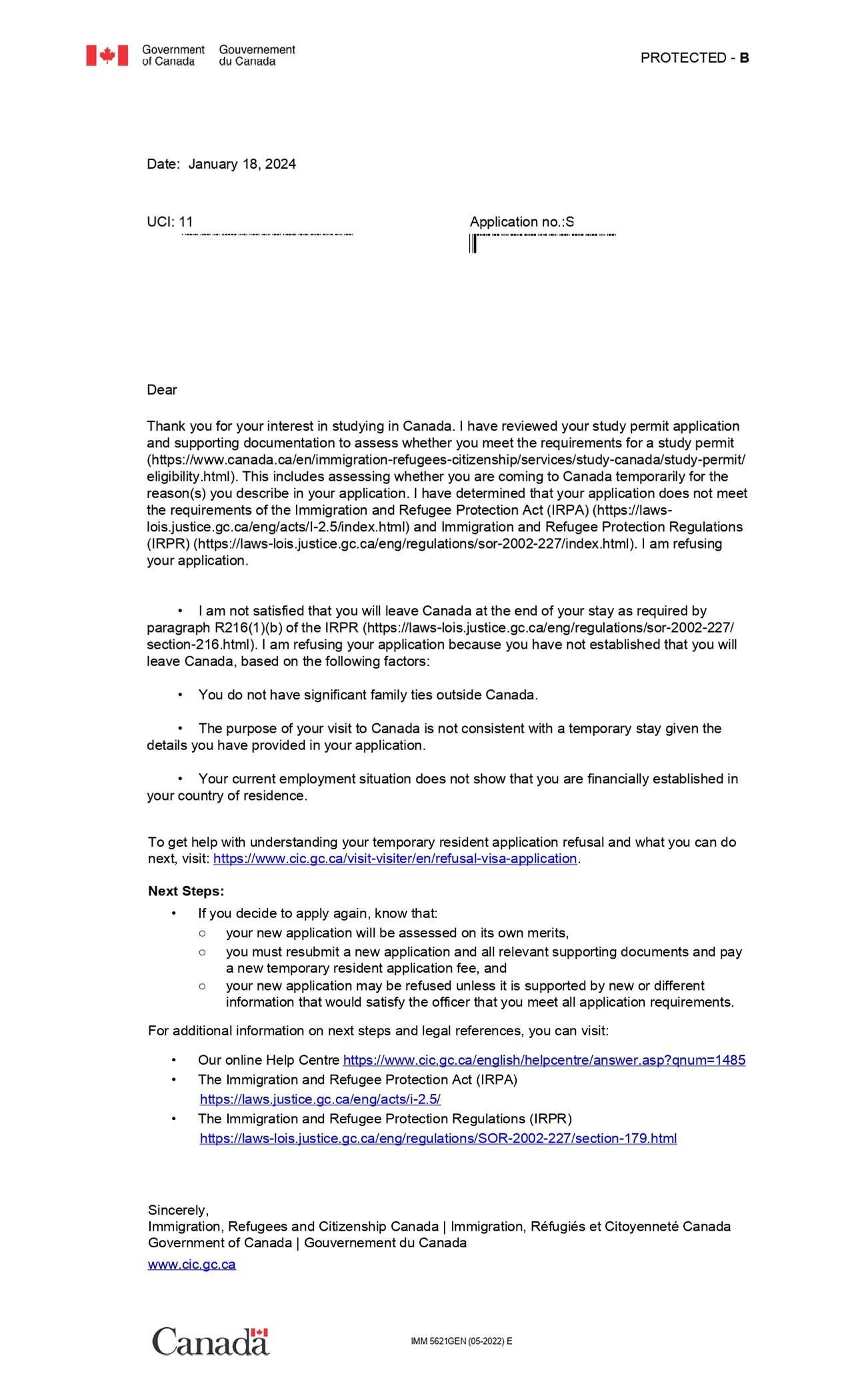
Canada may reject visa applications for various reasons. Common causes include incomplete or inaccurate documentation, failure to meet eligibility criteria such as age or financial stability, and security concerns like criminal records. Additionally, insufficient funds to cover expenses, inability to convince the visa officer of the purpose of the visit, past immigration violations, and health issues may lead to rejection.
To enhance the likelihood of visa approval, applicants must thoroughly understand and fulfill all requirements, submit accurate documentation, and ensure their eligibility. However, in the event of rejection, applicants may have the opportunity to either appeal or reapply, depending on the circumstances.
At Chaudhary Law Office, we provide comprehensive guidance and support throughout the visa application process to help maximize your chances of success.

Visa applications for studying in Canada may face rejection due to various factors. Inadequate academic qualifications, a lack of genuine study intent, and weak ties to one’s home country can all contribute to application refusal.
Additionally, insufficient financial support, incomplete or inaccurate applications, previous visa violations, medical inadmissibility, and criminal inadmissibility are common reasons for rejection.
Applicants must address these concerns, provide thorough documentation, and ensure accuracy in their applications to enhance the likelihood of success. Seeking guidance from our experienced immigration lawyer can also be beneficial in navigating the visa application process effectively.
Work visa applications for Canada may face rejection for various reasons. These include an inadequate job offer not aligned with your qualifications or the Canadian labor market needs, failure to obtain a positive Labor Market Impact Assessment (LMIA), and lacking the necessary skills and experience for the offered position.
Additionally, concerns about immigration status, financial resources, medical fitness, and criminal history can contribute to application refusal. Applicants need to address these factors, ensure compliance with visa requirements, and provide thorough documentation to increase their chances of approval.
Work visa applications for Canada may face rejection due to various factors. These include an unclear purpose of the visit, insufficient travel plans, limited proof of funds, a lack of ties to the home country, previous travel violations, misrepresentation of information, and inadmissible status.
Ensuring clarity in the purpose of the visit, providing detailed travel plans, demonstrating adequate financial resources, establishing strong ties to the home country, maintaining a clean travel record, providing accurate information, and addressing any inadmissible status issues are essential steps to enhance the chances of a successful work visa application.
Here are common reasons for visa refusals:
Visa applicants need to address these potential issues and provide accurate information to improve their chances of visa approval.
Reapplying for a denied visa can be a daunting task, but possessing the correct information can significantly simplify the process. The actions you take in your reapplication will vary depending on the type of visa you require. It’s crucial to avoid multiple refusals as they can significantly impact future visa applications.
In many instances, collaborating with our experienced Immigration Consultant or Visa Specialist to prepare and resubmit a strong application often increases approval odds.
If you’ve previously faced a refusal for any Canadian visa, you can reapply without delay. However, using the same information may not yield the desired outcome.
We’ve developed a four-step system for addressing previous refusals:
Chaudhary Law Office is committed to assisting you through every step of the visa refusal process. With our expertise in immigration law and dedication to client satisfaction, we strive to provide personalized solutions tailored to your specific situation.
Whether you are facing problems in the
TR to PR pathway or visa refusal, we are here to guide you and explore all available options for appeal or reapplication. We aim to maximize your chances of success and help you achieve your immigration goals.
Call 416-447-6118, and let us put our experience and resources to work for you!
Explore common questions and answers to learn more about our services and what to expect.
To avoid Canada visa refusal, ensure that you thoroughly understand and meet all the requirements for the visa category.
If your Canadian visitor visa is refused, you will receive a refusal letter outlining the reasons for the refusal. You may have the option to appeal the decision or reapply for the visa with a strong application addressing the reasons for refusal.
Yes, you can reapply for a Canada visa after a refusal. However, it’s essential to address the reasons for the previous refusal and submit a strong application with additional supporting documents or explanations to improve your chances of approval.
Canadian embassies keep records of denied visa applications for a certain period, which can vary. It’s advisable to contact the specific embassy or consulate where you applied for accurate information on record retention policies.
There is no specific waiting period after a visa refusal before you can reapply. However, it’s crucial to take the time to address the reasons for refusal and strengthen your application before submitting a new one.
There is no limit to the number of times you can apply for a visitor visa for Canada. However, each application will be assessed based on its merits, and repeated refusals may impact future applications.
Generally, visa application fees are non-refundable, even if your visa is refused. However, there may be exceptions or provisions for refunds in certain circumstances, such as processing errors or extenuating circumstances.
After a Canada visa refusal, thoroughly review the refusal letter to understand the reasons for refusal. Consider seeking professional advice from an immigration lawyer to address the issues raised in the refusal and prepare a strong application for reapplication.